Tyson’s $48 Million “Price-Fixing” Check Won’t Lower Your Grocery Bill
͏ ͏ ͏ ͏ ͏ ͏ ͏ ͏ ͏ ͏ ͏ ͏ ͏ ͏ ͏ ͏ ͏ ͏ ͏ ͏ ͏ ͏
Tyson’s $48 Million “Price-Fixing” Check Won’t Lower Your Grocery BillPrice fixing is illegal. In a consolidated meat market, it still pays.By Angela Huffman
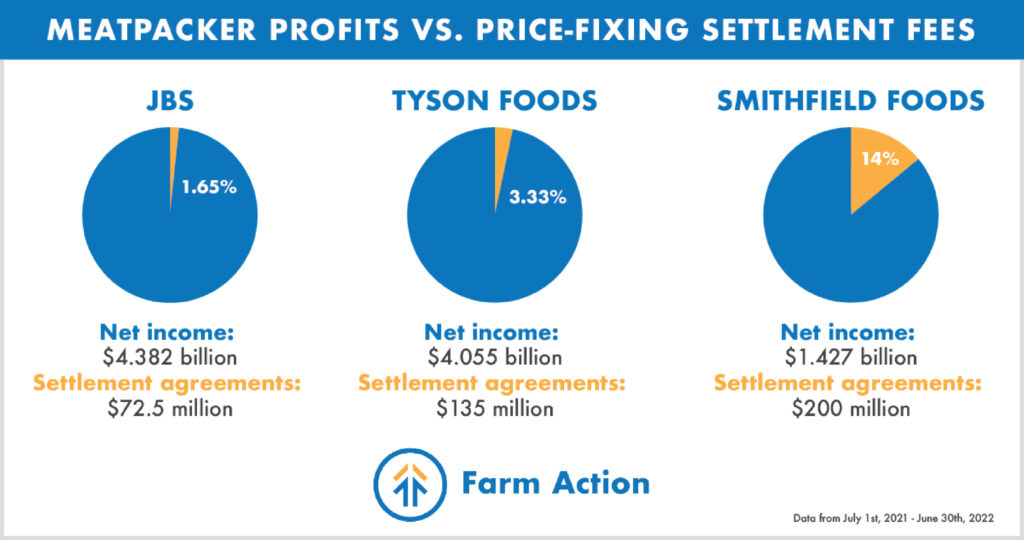
Tyson Foods just agreed to pay $48 million to settle claims that it helped fix pork prices. In plain terms, the lawsuit says big pork companies used shared data from a firm called Agri Stats to keep prices higher than they should have been. Tyson denies wrongdoing, but is paying to settle. Tyson is the sixth company to settle in this broader case. JBS, Smithfield, Seaboard Foods, Hormel, and Clemens have already reached agreements. Court filings show total settlements now exceed $114 million. You might read that and be glad they had to pay up. But these settlements are a drop in the bucket next to what these companies rake in off the backs of consumers. Pocket Change for Big Pork In a highly consolidated meat industry, penalties like this are easy to absorb. Tyson is a company that measures results in billions, not millions. When a corporation can clear billions in profit and later pay a settlement that barely registers, the settlement becomes part of the business plan. This is not unique to Tyson. Farm Action has tracked the same pattern across Big Meat. In one recent fiscal year, Tyson reported about $4 billion in net income and paid roughly $135 million across multiple price-fixing settlements. JBS reported $4 billion and paid $72.5 million across two settlements. Checks like these do not force a change in conduct. They confirm what the industry already assumes: getting caught is affordable.
Big Meat profits vs. price-fixing settlements. The “penalty” is a tiny slice of what they made. Source: Farm Action Who Pays When Markets Are Rigged This class-action case was brought by restaurants, delis, and other food businesses that purchased pork for commercial use between 2014 and 2018. These businesses do not have the leverage to bargain with national suppliers. They pay what the company demands, then scramble to make it work. If prices are inflated, owners raise menu prices and lose customers, or hold prices and absorb the hit. That pressure moves fast to workers, hours, and paychecks. Small businesses take the damage first. Farmers feel the squeeze too, from the other end of the chain. Consolidation gives processors leverage over the farm gate and the grocery shelf at the same time. Since 1970, the producer share of the consumer beef dollar has fallen from around 70 percent to about 37 percent. That gap reflects the slow transfer of wealth out of rural communities and into corporate boardrooms. The Data Sharing Problem Agri Stats is a company that sells detailed industry data to meatpackers. It shows them how their competitors are performing, down to things like costs, production levels, and profit margins. The lawsuit alleges big pork companies used that shared data to coordinate to keep prices higher than they should have been. They did not need to sit in a room and make a formal deal. When the biggest players are all looking at the same numbers, it gets easier for them to make the same moves at the same time. In a normal market, companies compete by cutting prices and trying to win customers. In a market dominated by a few giants, shared data can weaken that competition. That is why price-fixing allegations are rampant across pork, beef, and poultry. Investigations Are Not Enforcement This pork case is not an outlier. The same companies dominate beef and poultry. In November, President Trump said DOJ would investigate possible price manipulation in beef. We have seen this before. In 2020, DOJ investigated the Big Four after cattle prices collapsed while beef prices rose. Publicly, it went nowhere. The market stayed concentrated, and the lawsuits kept coming. If DOJ is serious this time, it has to do more than investigate. It has to enforce. Otherwise, Big Meat will keep treating settlements like a business expense, and consumers will keep paying more at the checkout. What Has to Change DOJ already has the authority under the Sherman Act. It needs to use it. Settlements that companies can shrug off will not change this market. DOJ should bring real antitrust cases and break up monopoly power in meatpacking. When a handful of corporations control the market, coordination becomes easier and consumers end up paying more. USDA has tools under the Packers and Stockyards Act to crack down on unfair and retaliatory practices that squeeze farmers and ranchers. That law has been underused for decades. Lower food prices and fair markets require consequences that change corporate behavior and reduce corporate power. The Bottom Line This settlement is not a refund. Consumers will not get their money back, and the next case is already on the way unless something changes. The fix is enforcement that hits where it counts, and real competition so these companies can’t keep rigging the market. Angela Huffman is free today. But if you enjoyed this post, you can tell Angela Huffman that their writing is valuable by pledging a future subscription. You won’t be charged unless they enable payments. © 2026 Angela Huffman |