NE Public Media: Its like a death’: Grief, hope and resilience after fire ravages Nebraska Sandhills
‘It’s like a death’: Grief, hope and resilience after fire ravages Nebraska Sandhills
By Molly Ashford , Nebraska Public Media
March 30, 2026
After the Morrill Fire tore through the Nebraska Sandhills, the wind picked up the sand and ash and spread it over the burn scar. (Molly Ashford/Nebraska Public Media)
At first, when Naomi Loomis heard about the fire that ignited near her Morrill County ranch, she waited it out. Texts poured in from neighbors and friends as she worked at the family’s feed store in Bridgeport.
Then her son called.
"Mom, I think you better head home."
Word travels fast, but fire moves quicker. By the time Naomi and her husband, Cody, arrived back at their ranch north of Broadwater, Nebraska, there was fire in the front yard. Fire in the fields. Fire in the trees. The power was out. Cody jumped in a loader and started dumping dirt on the flames that threatened the family home.
The house was spared. But nearly 4,000 acres of pasture land burned. So did the hay, fences and corrals. The cattle have singed backs, and one of the family dogs suffered burns to the eyes and nose. Some of the calves were burned severely. Those that survived sit in a makeshift nursery with their unharmed mates, drooling due to blisters on their mouths and tongues – likely, Naomi said, because they cried out as the fire passed over them.
“It’s like a death,” Naomi said of the damage. “We’re in mourning.”
Propelled by high winds and a tinderbox of dry foliage, the Morrill Fire traveled 70 miles and covered more than 450,000 acres in 24 hours. In total, the fire burned 642,029 acres across Morrill, Garden, Grant, Arthur and Keith counties. That’s nearly the size of the state of Rhode Island.
It was by far the largest fire Nebraska has ever seen; in a social media post, Secretary of Agriculture Brooke Rollins said it was the ninth largest wildland fire in U.S. history. Though an official cause has not been confirmed, Gov. Jim Pillen said it is believed to have been “electrical in nature with wind popping wires and sparks.” A photo was posted to Facebook of a downed electrical pole on Dove Ranch, where the Morrill Fire began.
The fire left parts of the Nebraska Sandhills – one of the largest intact temperate grasslands in the world, and, according to the National Parks Service, home to the “largest and best developed sand dunes in the Western Hemisphere” – unrecognizable. The dunes, typically covered by brown grass in the spring and an endless green in the summer, are coated in white sand. The only visible vegetation is charred yucca plants. When the wind kicked up after the fire calmed, it picked up the ash and sand and spread it over the burn scar.
“It would just swirl up in the air,” Cody said. “It looked like everything was on fire again.”
The Loomis Ranch pictured on March 19, 2026. (Molly Ashford/Nebraska Public Media)
In time, and with rain, the land will regenerate. Under controlled circumstances, burning can be beneficial to the prairie – it removes dead foliage and promotes soil health, allowing grasses to grow back stronger. It can also curb the spread of the Eastern Red Cedar, a native juniper that has become invasive across Nebraska’s grasslands and is itself highly flammable.
But there was nothing controlled about the Morrill Fire. Its perimeter stretches 399 miles. It torched homes and barns and corrals and fences, leaving barbed wire drooping into the ash-coated sand. It moved unpredictably as the winds shifted across the bone-dry land. All of the area was in severe or extreme drought when the fire moved through. Last winter was the second warmest and fourth driest in Nebraska’s recorded history.
One woman, 86-year-old Rose Mary White, died as she tried to escape the flames that destroyed her Arthur County homestead. Hundreds of livestock deaths have been confirmed. An official with the Rocky Mountain Complex Incident Management Team confirmed that 200 sheep were killed in the Morrill Fire. Ten calves died at the Loomis’ ranch.
Still, the true scope of the loss remains unclear. It could take months to quantify.
Volunteers descend on impacted counties
As she drove past homes that narrowly escaped the line of fire near Lake McConaughy, Patti Barnt’s phone rang almost constantly. Over speakerphone in her ash-coated Jeep, she spoke with donors in other states trying to find truckers to haul hay to impacted ranches, and with the truckers themselves, and with other volunteers.
Barnt, who grew up on a ranch in Keith County and now lives in the village of Mullen, founded the nonprofit American Lifeline Emergency Response Team, or ALERT, after volunteering to coordinate rescue efforts from afar during Hurricane Harvey in 2017. Now, with the emergency in her own backyard, she coordinates on the ground. As the temperature passed 80 degrees on March 19, she drove down the winding roads toward the Loomis’ ranch.
Jim Gardiner stands next to his truck after driving down the winding roads to the Loomis Ranch. He was one of three truckers bringing hay to the property on a Thursday afternoon in March. (Molly Ashford/Nebraska Public Media)
Ahead of Barnt, Jim Gardiner maneuvered his semi-truck through the curves, kicking up a cloud of dust and sand behind him. Eighteen bales of hay were strapped into the truck bed. Gardiner, who lives just south of the Nebraska-Colorado border, is one of many truckers to donate the time and mileage to haul donated hay to impacted ranchers. When he pulled in to the Loomis property, he was the third in line.
“It’s sobering to be up here,” Gardiner said, standing in front of piles of donated hay. “It really makes you see the need.”
Farm shops and truck stops on the outskirts of the Morrill Fire have been set up as donation drop points, where people drop off hay, barbed wire, fence posts and other supplies to be distributed to impacted landowners. Jordan Russell, owner of Heartland Lumber and Supply in Oshkosh, established a dropoff site in a vacant grain elevator across the street from his business. Some donors call with a specific recipient in mind. Others tell Russell to “figure out who needs it the worst, and get it to them.”
For both Barnt and Russell, there’s an emphasis on helping out smaller producers. Many of the family ranches that remain are run by the “third-, fourth-, fifth-generation descendants of the pioneers and homesteaders,” Barnt said. “The roots run deep here.”
Patti Barnt speaks with Jordan Russell, who owns a supply store in Oshkosh, about what ranchers need most in Garden County. (Molly Ashford/Nebraska Public Media)
“This is devastating, and it hits everybody – but it’s really, really going to affect those smaller ranches that might have to sell off after something like this,” Russell said. “We’re trying to do everything we can to make sure that doesn’t happen.”
A long road to recovery
In the areas impacted by the Morrill Fire, cattle is king. The most recent Census of Agriculture from 2022 found more than 900,000 acres dedicated to pastureland for nearly 85,000 cattle and calves in Garden County alone, where the fire burned the most land. Morrill County is one of the top cattle-producing counties in the nation; in 2022 it was home to more than 160,000 head.
Nebraska Department of Agriculture Director Sherry Vinton estimated that about 35,000 cattle would be impacted by the grazing land lost to the fire. That leaves ranchers with the decision of what to do with their cattle as the recovery process inches along.
Typically, Nebraska Extension Educator Aaron Berger said, cattle would be let out to pasture to graze starting in the early summer. If the weather shifts to cool and dry for the remainder of spring, grazing could be possible in some pastures by the late summer or fall. But Berger said it’s unlikely that most of the burned land will be utilized for grazing this year.
“If it continues to be warm and dry, it’s going to be very problematic in terms of recovery of those pastures,” Berger said. “Most ranchers, if their pasture burned, they’re not planning on turning out to graze, because there’s just not going to be adequate forage there for the cattle, and it’s best to let that area rest and begin to heal up before they go back out there with grazing livestock.”
An unburned calf stands in the nursery in which Naomi is taking care of a handful of calves who were burned when the fire passed through. (Molly Ashford/Nebraska Public Media)
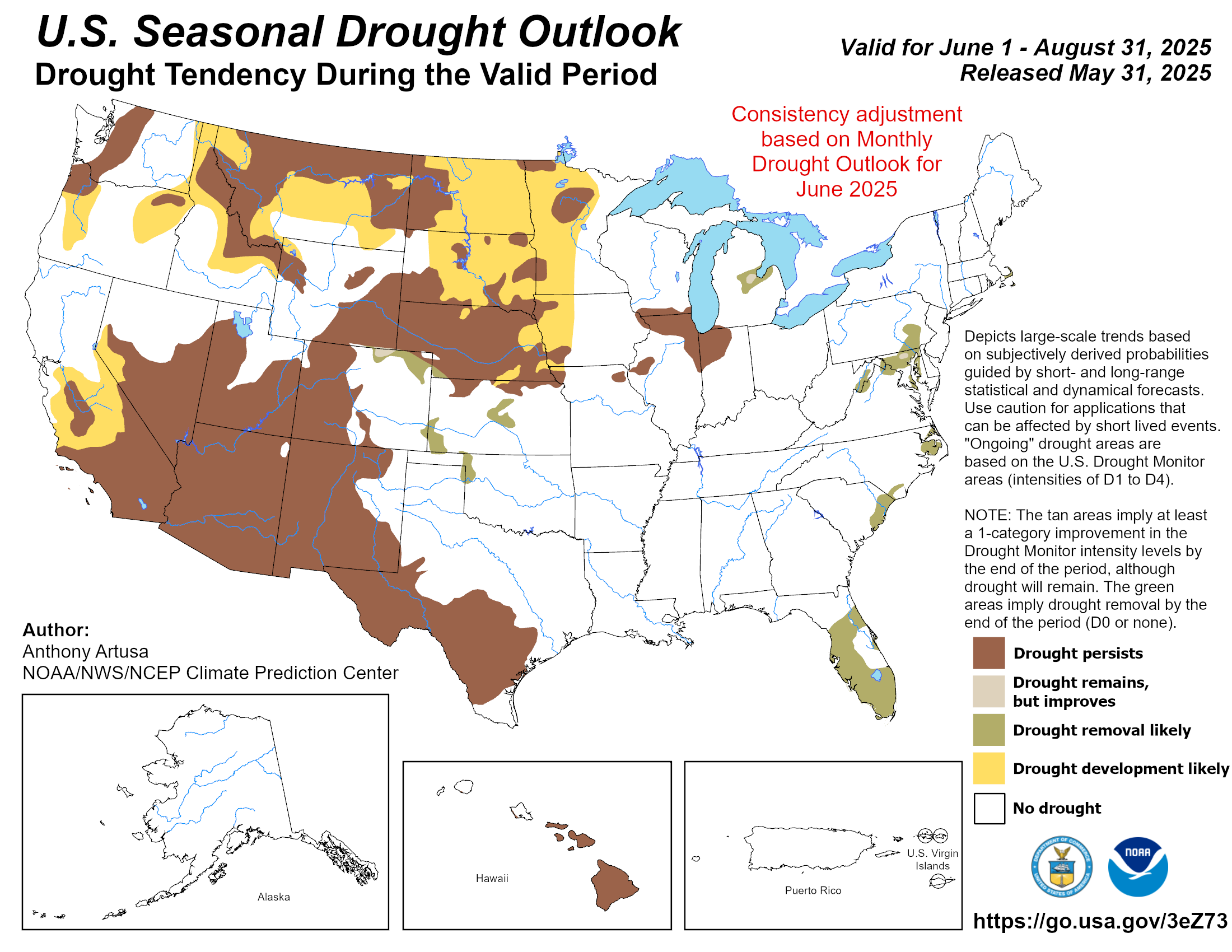
A reprieve from the warm and dry weather does not look likely. The most recent three-month outlook from the Climate Prediction Center predicts above-average temperatures and below-average precipitation across western Nebraska through June. Drought is also expected to persist or worsen throughout the state.
Across Nebraska, Colorado, Oklahoma and South Dakota, landowners have offered up their pastures or feedlots as a temporary home for cattle. On PastureMatch, a website founded to connect landowners with impacted ranchers, many offer up their space for free or discounted rates.
Other ranches will haul in hay to dry-lot their cattle, which entails feeding the cow-calf pairs in a feedlot-like environment during the typical grazing season. For now, that’s the plan at the Loomis ranch. Cody estimated they have enough hay brought in by truckers so far to last two or three months.
“I don’t know if I want to spread my eggs,” Naomi said, referring to sending the cattle elsewhere to graze.
Others still will send their cattle to feedlots earlier than usual. Berger said there’s no one-size-fits-all solution.
“There’s just as many different potential options as you can possibly imagine, based on where people are at,” he said. “It’s highly variable.”
Jim Gardiner, left, speaks to Cody Loomis, right, and Loomis’ son, center, on March 19, 2026. Gardiner was one of three truckers to haul hay to the ranch that afternoon.
(Molly Ashford/Nebraska Public Media)
What is consistent among ranchers, Berger said, is a sense of self-reliance, which can make some reluctant to ask for help. The outpouring of support is as gratifying as it is overwhelming. The best piece of advice Naomi received was to make someone else the boss as they start the slow recovery process, so they don’t have to make difficult decisions in the fog of grief.
At the Loomis ranch, they’ve grown accustomed to the constant stream of visitors. Their presence makes it easier to keep moving forward.
“Come out and see us, please,” Naomi said, speaking of the support from neighbors and community members. “You will not be stepping on my toes. Man, I legitimately… Like, you make me want to get up in the morning, and not just throw my hands in the air.”