DOJ Prepares Case Over Egg Prices That Didn’t Add Up
͏
DOJ Prepares Case Over Egg Prices That Didn’t Add Up
Less than a month after Farm Action called for an investigation, the DOJ opened one. Now it appears headed to court.
Angela Huffman
Apr 21
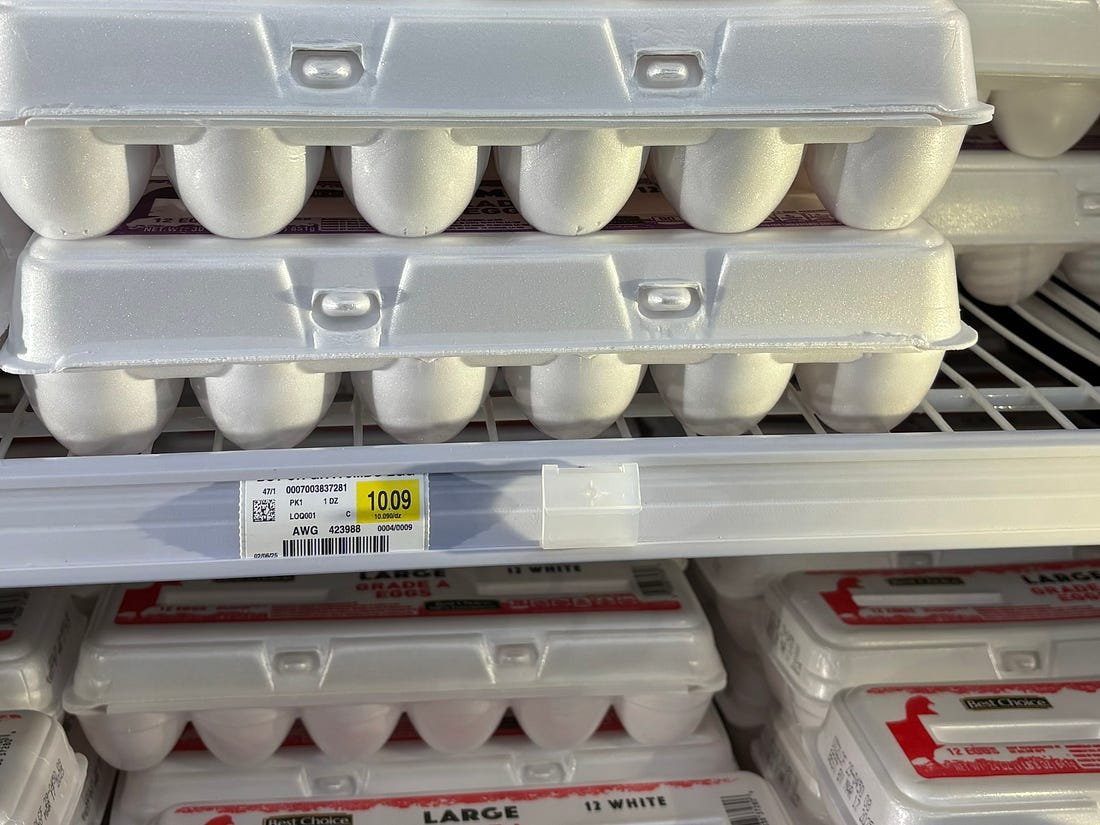
Eggs hit $10 a dozen in 2025. The explanation never fully added up.
The Department of Justice is preparing to file an antitrust case against some of the largest egg producers in the country, according to new reporting.
For years, Americans were told that egg prices were high because of avian flu and simple economics: Supply was down, so prices increased.
But the numbers didn’t add up. Farm Action began digging into the egg market in 2023, and what we found raised serious questions. Dominant egg companies were maintaining production while dramatically increasing prices and profits.
We brought those findings to federal antitrust enforcers in 2023 and 2025, pushing for an investigation. Shortly after our 2025 letter to the Trump administration, the DOJ opened one. Now, that investigation appears to be turning into a lawsuit.
Avian Flu Wasn’t a Free Pass
The biggest egg companies used the avian flu crisis to justify price increases and profit levels that went well beyond what the underlying disruption appeared to support. Our analysis found that the actual impact on overall production was far more limited than the public was being led to believe, even as prices shot up and profits exploded.
That is exactly why concentrated markets deserve scrutiny. When only a few firms dominate an industry, they have far more room to turn a crisis into a windfall.
The Wall Street Journal now reports that the DOJ’s planned case centers on allegations that major egg producers coordinated pricing through a benchmarking service used across the industry, similar to the meat industry’s Agri-Stats, which is also under antitrust scrutiny. If that is what happened, then consumers were not just paying more because birds got sick. They were paying more because dominant firms had the power to take advantage of the situation.
The Farmers Raising the Eggs Weren’t Getting Rich
One of the most important things Farm Action exposed is that family farmers were not the ones cashing in.
In March 2025, we published documentation from a Cal-Maine contract farming family showing they were being paid just 26.75 cents per dozen eggs. That family told us they are on duty 24 hours a day, seven days a week, 365 days a year, and yet had received just over a penny-per-dozen raise in more than a decade.
So while shoppers were paying $8 or $10 a dozen, the farmers doing the work were getting about a quarter.
This unfair setup is a good window into how concentrated agriculture works. The corporation at the center captures the upside. The farmer shoulders the labor, the risk, and the rising costs. Consumers get squeezed at the checkout line.
Farm Action also found that Cal-Maine had used its cash windfall to buy smaller competitors rather than increase grower pay, which only deepened its control over the market and left farmers with even fewer options.
Government Bailouts Made It Worse
While all of this was going on, the federal government kept sending huge sums of taxpayer money to the same dominant egg firms.
As Farm Action documented, the Biden administration paid $1.4 billion to the egg industry to offset avian flu losses. Then the Trump administration pledged another $1 billion, shifting money that had been allocated to support local food systems. That relief was geared primarily toward the largest operations using the same crowded, caged production systems that are especially vulnerable to outbreaks.
These bailout recipients were the same firms posting enormous profits while contract growers stayed stuck in one-sided contracts and consumers kept paying inflated prices. If the Trump administration finds these companies guilty of price-fixing, it should demand a return of those billions of taxpayer dollars, in addition to heavy penalties.
What the DOJ Does Next Will Matter
If the DOJ follows through with this case, it will be a significant test of whether antitrust law is actually going to be used to challenge concentrated power in the food system.
Enforcers should hold these companies accountable to the fullest extent of the law. Anything less risks teaching dominant firms that even if they get caught, the penalty will still be manageable, especially when they’re cushioned by government bailouts.
The larger issue goes beyond eggs. This is about whether a handful of corporations can keep using crisis conditions to increase prices, consolidate further, and then rely on taxpayers to clean up the fallout.
Thanks for reading! Subscribe for free to receive new posts and support my work.
Angela Huffman is free today. But if you enjoyed this post, you can tell Angela Huffman that their writing is valuable by pledging a future subscription. You won’t be charged unless they enable payments.
© 2026 Angela Huffman
548 Market Street PMB 72296, San Francisco, CA 94104
Unsubscribe