Challenging the assumptions that underlie our agricultural food policy.
The farm Bill claims to tackle affordability problems by increasing foreign labor, and consumers complain about the cost of a burrito.
August 15, 2026
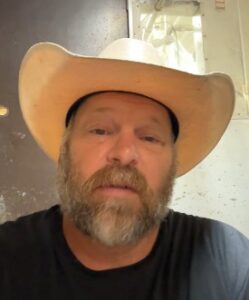
By JR Burdick
Recently, X has been embroiled in a controversy over the cost of a $20 burrito, and I have been mulling over a July article in Terrain by Ben Laine titled the 20,000-dairy farm future: consolidation in the Dairy industry and the abysmal farm bill of 2026. All three of these are based on costs and efficiency. Ben argues that we will have further consolidation as efficiencies of scale spur us to cheaper food. The farm Bill claims to tackle affordability problems by increasing foreign labor, and consumers complain about the cost of a burrito. But what none of this addresses is the root cause of the $20 burrito, and no one asked if the true cost of the Burrito is $20. Let’s dive into this real quick and see if we can find some answers.
The average family in America is obviously feeling the squeeze of today’s cost of living. We’ve heard the common complaints in some form for years now. Housing is too high. Gas is too expensive. Food costs too much. The other side of this K-shaped economy is flying high! All-time highs in the stock market; real estate, especially housing, is higher than ever, and a significant portion of people’s retirement is tied up in their homes. Entitlements seem to give the illusion that folks on the dole are doing well while the middle class is feeling further behind. And the rich are doing better than ever.
Dairy is a mirror of this, with large farms expanding at an alarming rate while small and middle-sized farms are declaring bankruptcy at an equally alarming rate. Cheese, once the stable price setter for the M&W (Minnesota-Wisconsin) pricing scheme, is now being replaced with other ideas, and actually the whey of cheese may be more in demand than the cheese itself! It’s a great metaphor for how inverted our food system has become. Milk at its core was in times past a very local food product. Now it’s a commodity to be manufactured and processed not for added nutrition but for convenience and transportation. East of the Rockies is now (and has been for some time) a deficit producer of milk, depending upon huge percentages of dairy being transported from west of the Rockies.
The farm bill, as I write this, is now more of a social engineering experiment than a food safety net. The House version has been stalled over the Save Our Bacon Act, SNAP funding for sugary drinks, and expansion of illegal labor. What does any of that have to do with the price of milk in north Missouri, you might ask?
“The $20 burrito and the $8-a-pound ground beef are the
result of economic law finally raising its ugly head.”
Everything! The golden age of agriculture had prices far above today’s when adjusted for inflation, and the consumer spent a far greater portion of their income on food. The idea that food is expensive today would be scoffed at by your and my forebears. Of course, the savings from the decreased spending on food by the average consumer was taken largely by an increase in taxes. Isn’t that amazing! As we spent less on food, government grew. It’s almost as if it was planned.
I remember sitting in a class in 1991 in one of the many buildings on the Campus of Michigan State University and being asked if I wanted government out of farming. I said yes. The professor, Jack McEown, then started to write down how involved Government was in agriculture. Everything from milk inspectors to conservation to pesticide applicator licenses. The chalkboard was filled with entities and organizations who had a hand in food production through policy, regulations, and funding. It was then I realized, as I looked at that white chalk on that green board, that we were intertwined beyond what the early reformers of the 20th century could ever imagine. The farmers who stood up to the crooked milk processors in the Northeast and Midwest and demanded the right to organize through Capper-Volstead never envisioned it would take us to a place of such dependence and social engineering. The Packers and Stockyards Act was on the board, and I queried about its origins. That led me to reading “The Jungle” by Upton Sinclair. An emotional argument that led to further government involvement, which was always going to lead us to the “Save Your Bacon Act” and infringement on state sovereignty and the unholy alliance of big business and Big Brother.
From those early 90s classes, I went on to farm with my parents and eventually on my own. I saw the farm debates surrounding the 94-farm bill and the ethanol debates of the early 2000s. I have seen the role of government through enforcement and control of supply and subsidy enticement expand to revenue guarantees picking winners and losers while offshoring the real food production in the name of “cost control” and a “cheap food policy” and keeping the cost of food produced here lower by turning a blind eye to illegal labor and monopolization that sucked equity from producers to subsidize the multinationals and globalist owners who were mainly concerned with ROI. I watched as the government went from a safety net to an intimate partner in my operation. When I was young and naive, I thought this was from genuine concern for Rural America and its plight. Instead, what I found was that this wasn’t about us, the few; it was about the many—our city cousins.
While we have had, in the past 5 years, a huge increase in public debt, we also had this in the 90’s and 2000’s through the 2010’s. The difference was we not only had borrowed money, but we also had equity the milk processors could steal. The equity was held by small farmers who felt trapped and had no other choice but to sell off their sovereignty as livestock owners and husbandmen to become “contract growers” for a faceless entity that had multiple layers of corporate oversight and seemingly endless access to money to consolidate and concentrate the industry. All the while, it masked the true destruction. The destruction of family farms was a human toll. The destruction of towns and rural communities was facilitated by cheap energy. You could drive 30 minutes and find a job or shop at a big box store. Options seemed plentiful, but they really weren’t. At the inception of this new efficiency, once independent farmers became sharecroppers working for the company store. The middleman’s company store always came first; the farms well being was significantly lower on the list. As farmers lost diversification and the steady income of livestock, the government came up with a new farm income scheme – ethanol. Ethanol became the newest idea for the corporate plundering of rural America with even more sharecropping opportunities.
Like so many schemes, this was just another way to fleece rural America, draining its equity. So many farmer-owned ethanol plants went broke, bought up by agribusiness and big oil for pennies on the dollar. The time from 1998 to 2015 will be seen as the greatest robbery of generational private wealth ever, and a shot was never fired, most of it was given up willingly! The 1998 hog debacle, the LDP (Loan Deficiency Payment) corn days, the cow that stole Christmas, followed by the ethanol craze, to the 2009 dairy depression, capped by the Tyson Holcomb fire. All of these events happened, and all of these events eroded the social contract for one reason – To keep burritos, milk, and bacon cheap!
You see, the $20 burrito wasn’t an overnight phenomenon; it’s the culmination of years of price suppression through government and big business collusion. The $20 burrito and the $8-a-pound ground beef are the result of economic law finally raising its ugly head. Our city cousins are becoming aware the golden goose is dead. It’s been eaten. There are no more options left but to pay the true cost of food.
Despite pontification from folks like Ben Laine, more consolidation or technology will not dramatically drop food costs. The House Agriculture Committee’s idea that cheaper labor will decrease food production costs is as valid as their desire to reduce the federal debt. Nope, my city cousins, we have been plundered, and our ground has been salted; we have no more to offer, and we have no more we can give – now you will have to pay the true cost for food.
Thank you for reading. I’m a dairy farmer in Linneus Mo. After fighting against the co-op model of consolidation in dairy processing I struck out and began selling direct to consumers in 2023. Our farm website is www.nourishingfamilyfarm.com our fb page is nourishingfamilyfarm
JR Burdick 816 351 6666